


Make Belief in India: The Great Indian Manufacture
One People, One Reich
If Karl Marx were asked to predict the plight of Weimar Germany, he would certainly theorise that the economic and social conditions of the time should have produced a turn towards socialist politics. Classical Marxism held that such an economic crisis, when coupled with intense industrial exploitation, would lead the proletariat to recognise their position as a collective subject capable of challenging capitalist domination. [1] The economic reality of the workers would determine their political consciousness directly. The trajectory of the late Weimar Republic would come to contradict this expectation. Rather than consolidating revolutionary class consciousness, the economic crisis in 1930s Germany coincided with significant working class support for National Socialism, revealing a gap in orthodox Marxist analysis.
By 1932, the Nazi Party, which led the National Socialist movement, was on the verge of financial collapse. [2] Germany’s economic situation had created the exact conditions that Marx theorised would generate revolution. It was at this juncture that German industrialists made a timely intervention. Having closely observed the Bolshevik revolution in Russia, industrial elites recognised that if such economic conditions continued, it could lead to the radicalisation of the working class in ways that threatened capitalist property.
The subsequent alliance between the industrialists and Nazi leadership was therefore more strategic than ideological. Through substantial financial support comprising several million marks, industrialists enabled a political project capable of absorbing this discontent by channeling it away from capitalism’s power structures. [3] Nazism offered a means of stabilising the social order by translating economic grievances into racial and cultural terms, and in doing so neutralised the revolution that Marx would’ve anticipated.
The Party proceeded to utilise its newly secured funding to strategically avert the discontent of the working class far from its capitalist origins and towards alternative ideological horizons, leading to the construction of an infrastructure for manufacturing political consciousness itself. They manufactured working-class consent through the genius of the Volksgemeinschaft, or the people’s community, which promised the transcendence of class division based on “true German values,” reframing class antagonism through racial belonging. [4]
What emerged as a result was the active reorganisation of the working class consciousness that made the critique of capitalism itself unthinkable. They detached economic grievances from capitalist relations, turning issues such as unemployment and wage stagnation to evidence of Jewish manipulation. [5] The actual industrialists who funded this entire apparatus vanished from political consciousness, absorbed into the sacred realm of the productive Volk, or the people. Nazism was therefore not false consciousness in any sense, but rather a redefinition of the interests of the workers to meet the benefit of the industrial elites who underwrote the media. Workers wore their exploitation like badges of honour because, through manufactured consent, they experienced their relations not as exploitative but as fair participation in national restoration.
Nazism wasn’t an aberration requiring a special explanation but revealed a pattern that had puzzled many for decades. Walter Lippmann identified the underlying logic in 1922: democracy in modern mass society depended on the “manufacture of consent” because modern capitalism had created a complex world that an attempt to understand this exceeded the cognitive capacity of any citizen. As a result, individuals created a “pseudo-environment”—a mediated mental image of the world shaped by representations and narratives circulated through mass media rather than reality. [6] Democracy faced an impossible contradiction: it required popular consent on matters the public could never fully comprehend, yet also depended on sustained participation and belief in the system. In order to preserve participation, a democratic society necessitates the translation of structural complexity into narratives that are emotionally intelligible and politically manageable.
Seen through this lens, the entanglement of media, state power, and capital isn’t the corruption of capitalist democracy but the very force that drives it. Any complex society requires shared narratives and institutional mechanisms that diffuse social interests into governable political order. The absence of these would not produce emancipatory politics but fragmentation and instability. Hence, the danger emerges not from the existence of manufactured consent but from its orientation and limit.
In Weimar Germany, the economic gains of the workers were real but premised on racial exclusion and political repression. The same media apparatus that integrated workers into the Volksgemeinschaft was catastrophic for those excluded from the moral universe of the Volk. Most contemporary democracies don’t reach this threshold because liberal institutions like opposition parties, independent courts, and plural media ecosystems, preserve space for genuine contestation. These boundaries are not permanent achievements but constant struggles against the structural pressures that capitalism continuously generates toward greater ideological control. What then are the boundaries that divide manufactured consent and fascism and what happens when the mechanisms that maintain this separation are themselves captured by the forces they were meant to contain?
It was this question that in 1988 motivated Chomsky and Hermann to develop the propaganda model. They identified five institutional filters that operate through the normal functioning of market-driven journalism to narrow the range of acceptance discourse. The filters are ownership concentration, advertising dependence, sourcing relationships with official institutions, organized pushback against dissent (flak), and dominant ideological frameworks. [7] These filters emerge from capitalism's institutional logic, and in stable liberal democracies, they allow vigorous debate within boundaries that don't threaten fundamental power relations.

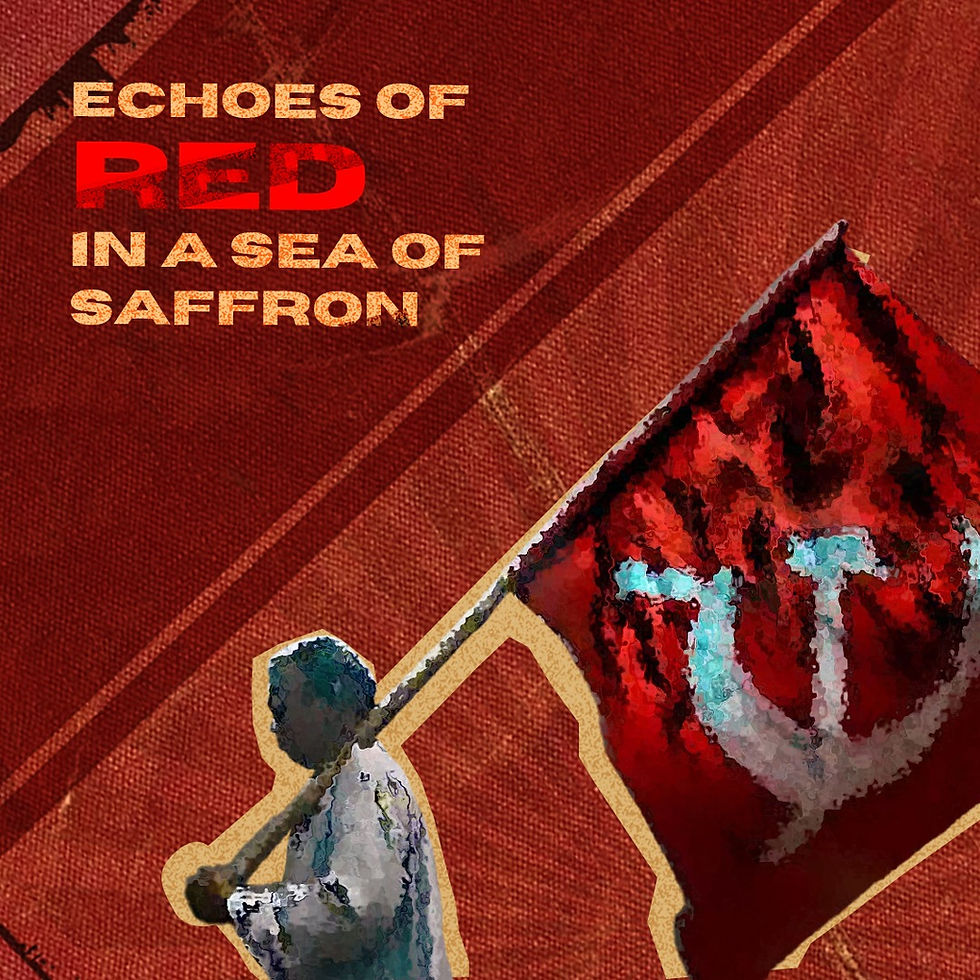
India under Modi provides a crucial case study because it demonstrates this transformation in real time: the same structural filters that operate in all capitalist democracies have been weaponised to the point where democratic forms persist but democratic substance progressively disappears. Modi’s government hasn’t abolished elections or dissolved the parliament. Democratic forms still remain through elections and an intact constitution, but their substance erodes as political consciousness is steered away from systemic critique toward cultural antagonism, mirroring the Nazi pattern. Oppositional institutions are delegitimised, disciplined, or marginalised, revealing how democracy can persist formally even as its emancipatory capacity is steadily undermined.
The Ones Who Pay the Piper
Following the Emergency, Indira Gandhi gave up on the Garibi Hatao initiative and instead prioritised economic growth; Rajiv Gandhi continued on this path in the 1980s, thus discarding the Indian National Congress’s earlier commitment to socialism. Post "liberalisation" in 1991, India’s growth was accompanied by a sharp increase in wealth inequality. The income gap between the rich and the poor widened to levels not seen since the colonial period. The policy changes led to private investments in India growing in relation to public investments. This decline hurt the countryside and poor regions of India, such that the lower classes became politically adrift. [8]

Much like Weimar Germany, Indian industrialists positioned themselves to intervene since they felt the inequalities would give rise to old-fashioned class conflict. The Congress, realising this, understood it needed to win the support of large business houses and yet failed miserably to do so. Preoccupied with their political dominance, Congress appeared more invested in celebrity narratives, preferring to gloat about headlines such as “India uncaged” in The Economist rather than consolidating an alliance. [8]
Meanwhile, at the “Vibrant Gujarat Summit”, Modi appealed to business leaders by presenting himself as a figure capable of restoring stability. This message resonated with India’s industrial elites, including figures like Mukesh Ambani and Ratan Tata, who accepted Modi’s vision and admired his leadership in Gujarat. Their support stopped just short of directly commenting on Modi’s candidacy for prime minister, but their investment was certainly a tacit validation of Modi. [9] [10]
Once Modi assumed power, this validation metastasised into a visible structural integration of corporate capital and media infrastructure. Unlike the Congress-coalition era, Modi presided over a centralised executive that proved receptive to corporate priorities in sectors governed by regulatory discretion, such as telecommunications, energy, infrastructure, and mining, where profitability depended less on market competition and more on state contracts and policy favour.
This arrangement needed to be insulated from public scrutiny and therefore media ownership functioned not only as a tool for persuasion but also as a structural safeguard, ensuring that the political figurehead remained electorally dominant, while the real beneficiaries of power receded from view. The integration resulted in a media landscape where meaningful dissent is eliminated. India's wealthiest industrialists, whose primary business interests lie in the very sectors that necessitate massive government contracts, systematically acquired media companies. The pattern mirrors Weimar Germany: capital funding not just a political movement but the apparatus to manufacture consent for it.
The mathematics of this control are stark. Mukesh Ambani owns the Reliance industries that through Network18 has over 70 television channels reaching approximately 800 million viewers. [11] More than half of India’s population is controlled by a single industrialist whose fortune depends on Modi’s government, and reveals a rigid apparatus of suppression. Investigative journalists within the network reported a “culture of censorship” where stories on cronyism were spiked in favour of more “nation-building” narratives. [12] Senior editors reported being explicitly instructed that the Prime Minister and the nation’s largest industrial houses were beyond the scope of critical inquiry [13], a shift that led to high profile exits such as those of Rajdeep Sardesai and Sagarika Ghose, who remarked that editorial independence and integrity had become impossible under the new management. [14] [15]
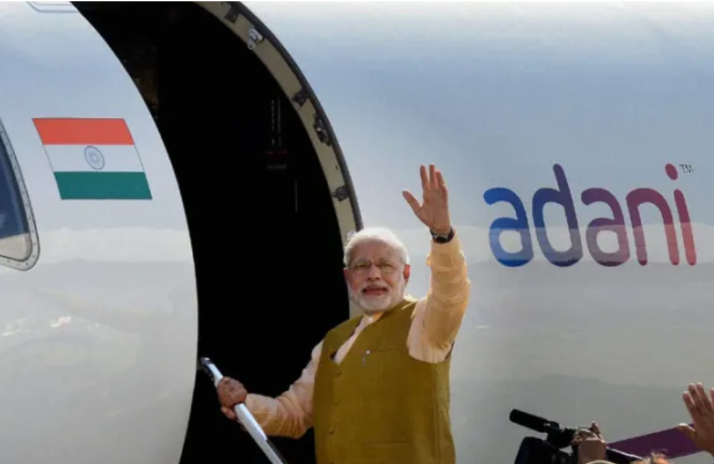
For decades, NDTV stood as the last major broadcast bastion of investigative skepticism. Its fall was no accident, but the culmination of a brotherhood forged in Gujarat between Modi and Adani dating to the early 2000s. Modi found in Adani a steadfast patron who defied boycotts by pouring investments into Mundra port, while co-founding the Vibrant Gujarat Summit. [16] Adani bailed Modi politically by diluting rival CII influence using the Resurgent Group, earning prime land, soft loans, and policy tweaks that ballooned his empire. [17] Modi jetted across India on Adani’s private plane during BJP’s landslide 2014 campaign en route to becoming the Prime Minister [18], with Adani clinching billion dollar state bank loans post victory, cementing a nexus of state contracts worth trillions. [19]
In 2009, NDTV founders Prannoy and Radhika Roy took a Rs. 403.85 crore loan from Vishvaprad Commercial Pvt Ltd, a subsidiary of Reliance. The loan used NDTV shares as collateral. [20] In 2022, thirteen years later, those shares were transferred to an Adani company, giving Adani a 29.18% stake in NDTV, the largest shareholding at the time. [21] Through subsequent open market purchases, Adani increased his stake to over 64%, acquiring controlling interest. The Roys, who had built NDTV over three decades, were forced out. [22]
Ravish Kumar, the network’s conscience incarnate, resigned mere hours after founders Prannoy and Radhika Roy vacated the board, his YouTube announcement decrying a “dark age” where journalists train merely to become “agents of the state”. [23] No institution for ethical reporting remained and the 2023 Hindenburg cataclysm would prove the rule. After the Hindenburg report alleged Adani’s brazen stock manipulation via offshore shells, the revamped NDTV enforced a three day blackout and then regurgitated Adani’s retort verbatim as an existential “attack on India”. [24] [25] This maneuver successfully conflated the private wealth of an industrialist with the sovereign honor of the republic.
Anchor Sarah Jacob quit NDTV post a fawning Modi hagiography on “respect for women,” aired even as his regime greenlit the release of 11 convicts in a pregnant Muslim women’s gang-rape and her family’s slaughter during the 2002 Gujarat riots. [26] [27] NDTV was taken over by Adani CTO Sudipta Bhattacharya and BJP-aligned veterans Senthil Chengalvarayan and Sanjay Pugalia, following which it devolved into Bollywood fluff, Disney fistfights, and BJP grievance megaphones, its Hindi channel priming 400 million viewers for 2024’s electoral theatre while systemic critique vanished. [23]
The 2018 demonetisation policy serves as another example of this “Chomskyan” filter in motion. On November 6, 2016, Modi announced the overnight cancellation of Rs. 500 and Rs. 1,000 notes which formed 86% of India’s currency. [28] As the informal economy collapsed and the poor perished in bank lines, the Reliance-owned media empire hailed the chaos as a “surgical strike on black money”. [29] Network18’s channels drowned out the cries of the marginalised with patriotic paeans, while Ambani used the Reliance AGM podium to laud the Prime Minister’s boldness, simultaneously launching Jio Money to capture the newly forced digital transaction market. [30] Curiously, the Jio Payments Bank was incorporated just two days after the demonetisation announcement, perfectly positioned to benefit from the state mandated cash vacuum by providing digital payments. [31]
The Reserve Bank of India later revealed that 99% of demonetised currency returned to the banks and that the policy had failed in its goal of catching “black money”. [32] For Ambani however, it proved to be a complete success. Jio’s user base exploded as Indians were forced into digital payments and Network18’s coverage ensured the narrative of a “bold reform” rather than “coordinated looting”. This was Chomsky’s first filter in its purest form: media owned by beneficiaries manufacturing consent for policies enriching owners.
The integration is now so complete that the distinction between state policy and corporate strategy has dissolved. Beyond the “Big Two”, the pattern repeats: Zee Media corporation which reaches 1.3 billion viewers across 76 channels is owned by Subhash Chandra, a Rajya Sabha member affiliated with the BJP. Republic TV is co-founded by Rajeev Chandrashekhar, another BJP-aligned Rajya Sabha member. Every major television news network is either owned by industrialists with massive government contracts or politicians from the ruling party itself. [33]
What remains is negligible. The biggest independent digital platform, Scroll.in, attracts only 3.5 million unique visitors monthly. The News Minute reaches 3 million and The Wire reaches 1 million. Comparing this to Reliance’s 800 million alone, independent media represents less than 1% of total media consumption. [34] They exist merely as proof of theoretical press freedom while remaining incapable of challenging manufactured reality produced by corporate-owned infrastructure that reaches 99% of the population.
Corporate ownership exists in every capitalist democracy and doesn’t necessarily preclude democratic function. In the United States, six corporations control 90% of the media [35], yet meaningful critique persists because ownership is distributed among competing corporations with different interests. India’s situation differs qualitatively, since media ownership isn’t just concentrated but aligned. The issue isn’t about the concentration but what it produces. The same wealthy tycoons who own the media depend on the Modi government for contracts in their primary businesses. Since Ambani’s telecom empire needs spectrum allocation and Adani’s infrastructure projects need government approvals, their media properties aren’t just profit centres but protective infrastructure for their primary businesses.
This transforms media from independent industry into a subsidiary of regime-aligned capital. When Adani owns NDTV and simultaneously holds Rs. 2.2 trillion in government contracts for ports, airports, and power projects [36], NDTV's coverage of government corruption becomes existential threat to Adani's core business, making media independence an economic suicide. In stable liberal democracies, corporate-owned media maintains space for meaningful criticism because institutional pluralism prevents total capture. India's corporate media has calculated dissent out of existence, ghettoising it into a digital periphery reaching 1% of the population while 99% consume a reality where systemic government critique is unthinkable. That distinction marks the threshold between bounded manufacturing of consent and authoritarian consciousness manipulation.
May the Ads Be Ever In Your Favour
Ownership concentration might create structural conditions for compliance, but ownership alone cannot discipline every outlet. The Times of India, owned by Bennett Coleman rather than Ambani or Adani [37], might theoretically resist along with foreign media like the BBC that operate beyond Indian ownership control. Regional newspapers owned by families could also pursue independent editorial lines. This is where Chomsky’s second filter comes into play, using advertising as a precision weapon that disciplines outlets regardless of ownership structure.
The Modi government has weaponised advertising as a tool for disciplining dissent. This works because media outlets face an advertising market where the government functions as the single largest advertiser. Official data reveals the BJP government advertising spending averaged $170 million annually in its first term, more than double the Congress government’s $71 million annual average from 2004 to 2013. [38] The architecture operates through the Directorate of Advertising and Visual Publicity (DAVP), the nodal agency under the Ministry of Information and Broadcasting that manages government advertising. DAVP handles multimedia advertising through print, audio-visual, outdoor publicity, and digital media. For major newspapers, government advertising usually accounts for 15% of total revenue. [39]
In March 2019, The Hindu published a series of investigative reports on the Rafale fighter jet deal, exposing how Modi’s government had agreed to pay €7.8 billion for 36 aircraft which was three times the per-unit cost negotiated by the previous Congress government for 126 aircraft. [40] Former Hindu editor N. Ram revealed that the newspaper “faced a big hit on advertising post the Rafale investigation” [41], with government advertising to The Hindu stopping entirely just before the general elections in 2019. The Times Group faced similar retaliation during the 2019 Lok Sabha campaign when they published investigative reports accusing Modi of violating the Model Code of Conduct. Government advertisements to the Times Group stopped from June 2019 onward, with the ban covering both print (Times of India, Economic Times) and television (Times Now, Mirror Now). The Telegraph faced cuts after publishing a front page mocking Modi for blaming India's problems on Jawaharlal Nehru, the nation's first prime minister who died in 1964. [42] [43] All three outlets had committed the same offense: publishing factual criticism.

It is a notable fact that the total government advertising hasn’t decreased, just been concentrated among compliant recipients. In Delhi alone, government spending rose from Rs. 23.21 crore distributed across 474 newspapers in 2021-22 to Rs.40.56 crore directed to just 118 publications in 2023-24, the year before national elections. Nationally, spending surged from Rs. 122 crore in 2021-22 to Rs. 259.33 crore in 2023-24, more than doubling in two years. [44]
A 2018 Cobrapost investigation revealed Modi’s government increased advertising by more than 50% for 896 newspapers while simultaneously cutting advertising for 2664 newspapers by more than 50%. The pattern that emerged from this was ideological and communal. Organiser, the Hindutva pro-Modi mouthpiece in English, saw its spend share increase 214%, while Janmabhumi, a Malayalam daily close to the BJP, saw increases of 413% and 1194% for its Kottayam and Thiruvananthapuram editions respectively. Meanwhile, outlets that maintained critical coverage faced systematic cuts. [45]
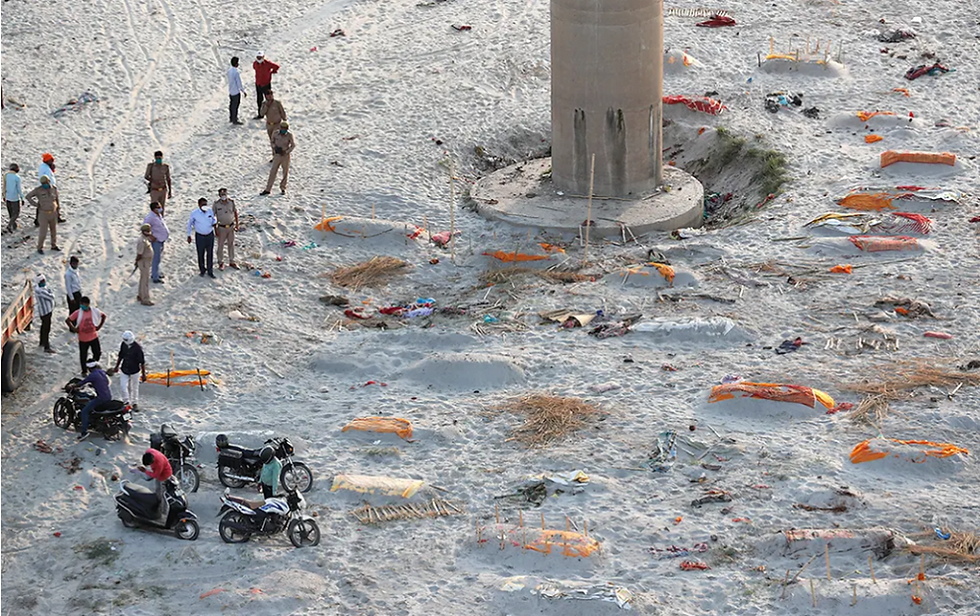
The consequences of this advertising-enforced compliance proved lethal during India’s COVID-19 crisis. Even as crematoriums overflowed with corpses and the Ganga carried dead bodies downstream, the Modi government convened a workshop for hundreds of top officials on “effective communication”. The agenda was to create a “positive image of the government” and develop a “positivity strategy” to deflect criticism of pandemic handling. [46] This wasn’t crisis management but propaganda coordination where the government manufactured reality while reality manufactured corpses.
Just two months earlier, India’s health minister had boasted that the country was in the “endgame of the COVID-19 pandemic” based on the declining case numbers [47], and had used corporate media to further amplify the message without facing any criticism. The manufactured laxness proved to have dire consequences with case numbers mounting exponentially just a month later. Yet Modi ran with the manufactured narrative, endangering those who attended his massive gatherings without wearing masks. [48] The government’s “positivity strategy” encouraged media silence as hospitals ran out of oxygen and bodies piled up on the streets.
In response, Dainik Bhaskar dispatched 30 reporters to document the newly dug graves along the 1140 kilometer stretch of the Ganga river’s banks, exposing 2000 bodies floating in water or buried along its banks, when the official death counts claimed minimal casualties. Their coverage criticised vaccination claims, reported systemic undercounting of deaths, and documented the oxygen shortage.
The publication had deployed 207 reporters across Madhya Pradesh, Rajasthan, Gujarat, and Uttar Pradesh, pushing 80% of its reporting strength to document the reality of the pandemic on ground. [49] In Rajasthan, it reported that 512 villages recorded 14,482 deaths in 50 days, contrary to the government’s claim of 3918 deaths in 25 districts. [50] In Gujarat, Divya Bhaskar (the group’s Gujarati daily) revealed 123,000 death certificates had been issued between March 1 and May 10, 2021, 65,000 more than the previous year while the COVID death toll stood at 4218. [51] The coverage went viral domestically and internationally, directly contradicting the government’s narrative of effective pandemic management.
The response of the government was therefore overwhelming. Dainik Bhaskar’s advertising revenue fell from 47% in 2021-22 compared to the previous year, dropping from Rs. 5.95 crore to Rs. 3.15 crore. [52] Meanwhile Dainik Jagran, which maintained pro-government coverage, saw stable revenue, declining only marginally from Rs. 13.1 crore to Rs. 12.47 crore. [53] Bhaskar had held the second-highest government ad revenue among Hindi newspapers in 2020-21, behind only Jagran, however by 2021-22 it fell to the fifth position. The manufactured consensus that Dainik Bhaskar had aimed to expose had direct consequences. [52]
The reality was catastrophic, and even that is a timid description. The official death toll stood at 414,482 as of June 2021, but analysis from the Centre of Global Development said between 2.4 million and 4.7 million excess deaths occurred between January 2020 and June 2021, ten times higher than any official figures. [53] Recently released government data shows almost 2 million died in 2021 than expected, far exceeding the government’s claim of 3.3 lakh. [54] In Gujarat, local media tracked 689 cremated bodies under COVID protocols in one day in mid-April but only 78 deaths made it to the government’s official tally. [55]
Corporate media receiving concentrated government advertising were forced to maintain the manufactured narrative. This was complemented by the media empires of Modi’s billionaire friends. Reliance’s Network18 provided favourable pandemic coverage and Jio benefitted from the increased digital adoption during lockdown, much like demonetisation where pro-government coverage served its corporate interests. The media’s Pavlovian obeisance to power helped build up an epic tragedy since a media trained and coerced to amplify the ruling party uncritically failed to hold it to account when it needed to force real action that would’ve saved lives.
The World Health Organisation estimated between 3.3 and 6.5 million people died, but official sources confirmed only 414,000. [56] The media, dependent on government advertising, reported these official numbers silencing millions of deaths because questioning government statistics meant financial exclusion. When media survival depends on government favour, the truth itself becomes unaffordable. The mountains of corpses that emerged as a result is as much on the complacent media as it is on the government. Chomsky’s second filter in its most aggressive form thus transformed what was left of the Indian media into a propaganda apparatus, making critique economically impossible.
The Ministry of Truth
If Chomsky’s second filter demonstrated how economics punishes dissent, the third filter operates where the second cannot reach. Journalism claims to hold power accountable, yet it depends on power to define what counts as news. A reporter can’t simply claim something happened, they must anchor these claims to official sources like government spokespeople, police statements, and corporate press releases.
In liberal democracies, this sourcing dependency produces subtle bias towards establishment narratives, but in Modi’s India, it has been weaponised onto an epistemological stranglehold. While sourcing dependence usually nudges journalism toward institutional perspectives, the Modi government has restructured the informational environment such that alternate verification is rendered structurally impossible. What emerges is not merely biased reporting but the erosion of conditions where truth can be independently established.
A defining feature of this transformation is Modi’s systematic refusal to engage with the press in any manner. In his ten years as Prime Minister, Narendra Modi has held exactly zero genuine press conferences. There was a tame attempt in May 2019, five days before the election result, where Modi appeared beside then-BJP President Amit Shah, speaking briefly but diverting most of the questions to Shah. When a journalist attempted a follow-up directed at the Prime Minister, Shah cut him short, declaring that Modi need not respond since the party president had already answered. [57]
This marks a radical departure from democratic precedent; Manmohan Singh, Modi’s predecessor, held 114 press conferences during his tenure. [58] Even leaders governing during periods of crisis like Indira Gandhi during the Emergency or Lal Bahadur Shastri during the 1965 war faced the press regularly. Modi’s refusal is a calculated policy since press conferences function as institutionalised moments of unpredictability, where contradictions can be exposed in real time. In the absence of press conferences, journalism is forced to rely on unilateral statements and social media broadcasts. Official claims become insulated from interrogation, while journalists lose the opportunity to test narratives since power speaks but remains unquestioned.
Modi’s innovation wasn’t just controlling his official statements but systematically eliminating independent mechanisms for generating official data. In September 2016, the National Sample Survey Office released its fifth Annual Employment-Unemployment Survey, revealing unemployment had reached a five-year high in 2015-16. The government’s response to this criticism was erasure rather than rebuttal, choosing to scrap all subsequent Annual Employment-Unemployment Surveys, including the quinquennial Employment-Unemployment Survey that had been conducted since India gained its Independence. [59]
However, after sustained pressure from economists, the government instituted a replacement by conducting the Periodic Labour Force Survey between July 2017 and June 2018. This survey was the first comprehensive employment data after demonetisation and showed unemployment at a 45-year high of 6.1%. [60] The National Statistical Commission, an autonomous body mandated to coordinate India’s statistical activities, planned to release this information in December 2018 but was met with refusal from the government ahead of the approaching elections.
On January 28, 2019, the last two independent members of the National Statistical Commission resigned in protest, among whom was P.C. Mohanan, the acting chairman. [61] In interviews following his resignation, he confirmed that the report was ready to release and that its suppression was direct interference by the government in an autonomous institution. Only after the 2019 election did the government release the suppressed data, validating everything critics had alleged about demonetisation’s economic devastation. [62]
The same pattern repeated across India’s statistical infrastructure. GDP calculation methodology was changed in 2015, producing higher growth figures that the old method would have generated. When former Chief Economic Advisor Arvind Subramanian later published research questioning the new methodology, his finding that the growth had been overestimated by 2.5 percentage points was dismissed despite his insider status. [63] No comprehensive survey has been conducted for poverty since 2011-12, creating a decade-long data vacuum on poverty during Modi’s rule. Each suppression follows the same logic that if the official data contradicts the government’s narrative, eliminate the data. For journalists, this creates an impossible bind since to report about “poverty under Modi” requires official poverty data as a credible source.
The Right to Information Act of 2005 represented the sole structural threat to this sourcing monopoly. RTI allowed citizens and journalists to generate official documents independently by compelling the government agencies to provide information. The aim of the mechanism was to bypass dependence on government spokespeople’s voluntary disclosures. Since the beginning of this tenure, Modi sought to methodically hollow out this mechanism. Since 2014, the Central Information Commission that deals with RTI claims has faced systematic vacancy creation such that by late 2018, eight of eleven Information Commissioner positions remained unfilled. Backlogs ballooned 26,000 pending RTI as the skeleton staff drowned. After activists approached the Supreme Court demanding appointments, the government filled positions but refused to be transparent about the selection process which ironically is itself a RTI violation. [64]
In 2019, Modi passed the RTI Amendment Act, eliminating the five-year tenure for the Information Commissioners and granting the central government control over their salaries, tenure, and service conditions. The amendment eviscerated commissioner independence, transforming them from autonomous adjudicators into government employees who were subject to executive pressure. [65] The 2023 Digital Personal Data Protection Act delivered the final blow, imposing a blanket ban on disclosing “personal information” without an explicit definition of the term, ensuring that any inconvenient revelation could be suppressed using this excuse. RTI, once a structural bypass to sourcing independence, was thus converted to an instrument of executive control. [66]
The few RTI activists who persist face lethal consequences, with scores being murdered. The precise numbers are disputed since the government doesn’t maintain records of RTI activist deaths, creating a recursive information void. [67] The most prominent cases involve Modi personally with this Master’s degree from Gujarat University being called into question. The university refused disclosure, claiming privacy, while courts stayed Information Commission orders to release the records. In August 2025, the Delhi High Court ruled that Modi had “the right to keep his degree private”, quashing the order despite the degree being mentioned in Modi’s election affidavit—a public document voters have the right to verify. [68] [69]
The final “prong” of this sourcing trap is formed by communication blackouts. Between 2016 and 2023, India shut down the internet 771 times, accounting for more than half the shutdowns globally. [70] Research reveals that districts in BJP-ruled states experience significantly more internet shutdowns, primarily in response to protests, with a BJP-run state being 3.5 times more likely to impose an internet ban than non-BJP states. [71]
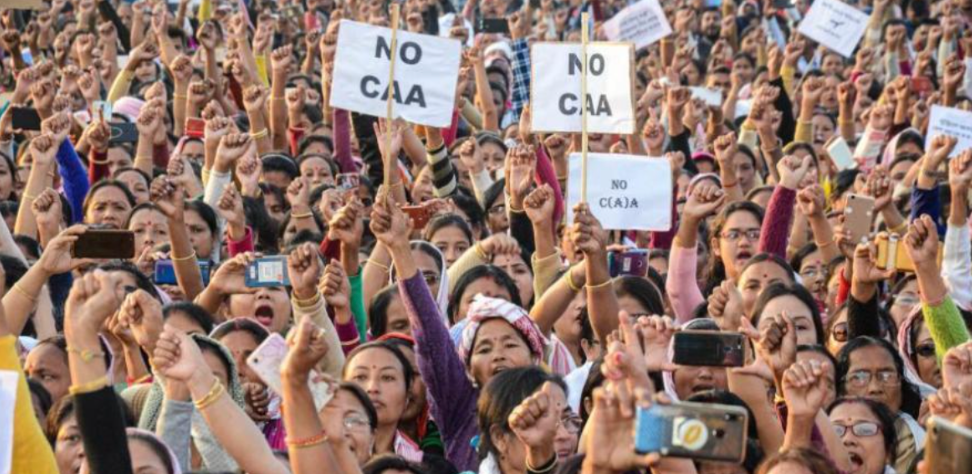
Modi’s communication blackouts have been deployed across diverse contexts. During December 2019 Citizenship Amendment Act protests, the internet was shut off for northeastern states of Assam, Meghalaya, and Tripura, affecting 36 million people, alongside swaths of West Bengal and Uttar Pradesh holding 200 million people. [72] Similarly, during the farmers’ protests in 2020-21 and again in February 2024, authorities imposed temporary internet shutdowns as the caravan moved from Punjab toward New Delhi. [73]
Most famously, on August 5, 2019, the Modi government revoked Article 370 of the Constitution, stripping Jammu and Kashmir of its autonomous status and bifurcating it into two Union Territories controlled directly by the central government. The constitutional change was accompanied by an information siege, with internet and mobile networks being shut down, and landlines and cable television disconnected. Journalists were no longer allowed to move freely through the newly split regions and foreign journalists were denied entry. The blackout lasted over five months before archaic 2G services were partially restored and finally full 4G access was restored in February 2021, marking the end of the longest internet shutdown ever imposed in a democratic nation.
Government briefings, of course, claimed peaceful transition, normalcy, and public support of the Kashmiri people since independent verification was impossible. Journalists present outside Kashmir couldn’t enter it and those inside weren’t able to communicate their findings. In this vacuum, government briefings became the sole source of information. A Media Facilitation Centre was established in Srinagar which allowed journalists to gain internet access only under surveillance, ensuring censorship of information. Meanwhile there was turmoil erupting in the Kashmir Valley. On August 9, at least 53 young people were treated for injuries at Sher-i-Kashmir Institute of Medical Sciences following a response to demonstrations in Soura. Thousands were detained without charge, including former chief ministers Omar Abdullah and Mehbooba Mufti. Yet the Indian mainstream media echoed the government’s claims of “negligible protests” and “widespread acceptance” while the people of the Kashmir valley drowned in their suffering. [74]

Chomsky and Herman identified sourcing as a filter with subtle bias yet Modi weaponised it to create a singular information stream. Through his “four pronged” approach of eliminating press conferences to prevent accountability, destroying data infrastructure to mitigate demeaning statistics, hollowing out accountability mechanisms, and imposing blackouts to prevent physical verification access, Modi changed propaganda in the traditional sense by the insidious elimination of the infrastructure through which the truth itself is verified. When power alone defines what counts as evidence, reality itself becomes administratively curated.
How To Get Away With Murder
Flak, in Chomsky’s model, refers to negative responses designed to discipline media content. In liberal democracies, this emerges from competing interests who deploy criticism as marketplace competition. In pluralistic systems, flak is typically fragmented: competing interests generate countervailing pressure that limit any single actor’s ability to impose durable constraints on media behaviour. While such systems are far from neutral, their internal plurality preserves a narrow space for meaningful dissent. In modern India, however, flak no longer emerges from dispersed political actors but is increasingly monopolised by the state and its affiliated institutions.
What distinguishes such authoritarian flak isn’t existence but monopolisation. Punitive mechanisms flow from a singular source, the state, which operates through legalised extortion, economic harassment, legal persecution, physical surveillance, and digital terror. What distinguishes Modi’s flavour of this filter from classic dictatorship is the veneer of legality that is achieved while meeting identical goals.
On February 14th, 2023, income tax officials raided BBC offices in Delhi and Mumbai for three consecutive days. The raids came exactly after the BBC aired India: The Modi Question, a two-part documentary critically examining Modi’s role in the 2002 Gujarat riots that killed over a thousand people, predominantly Muslims. [75] The government had used emergency powers under Information Technology rules to block the documentary in India, and compelled YouTube and Twitter to remove all links. When Indian universities attempted screenings, the police shut down the event. [76] [77] The tax raid was just the next escalation in this sequence.
Sixty to seventy officials sealed BBC offices, prohibiting entry or exit, while employees’ phones were confiscated. Journalists were questioned for hours without access to legal counsel. The “survey”, as officials termed it, lasted three days before the Ministry of Finance accused the BBC of tax evasion, claiming the broadcaster hadn’t fully declared income or profits. The process being the punishment, no charges were filed. [75] Human Rights Watch characterised the raid as “intimidation and harassment” of press organisations critical of the government, while the Press Club of India condemned them as a part of “a series of attacks on media by the government agencies, especially against those sections the government perceives as hostile”. [78]
The pattern certainly wasn’t novel. Preceding this incident, the income tax department had previously raided Newslaundry, Dainik Bhaskar, and Bharat Samachar, following their critical coverage of the government establishment. [79] In fact, just a few months later, the Delhi Police would raid 30 locations across Delhi and Mumbai targeting journalists and writers associated with NewsClick, an independent digital news portal known for its critical coverage on the Prime Minister. Forty six individuals were questioned, including senior journalists like Paranjoy Guha Thakurta, Aunindyo Chakravarty, and Sohail Hashmi. Electronic devices were seized and the NewsClick offices were sealed, following the arrest of editor-in-chief Prabir Purkayashtha, the Unlawful Activities Prevention Act (UAPA), India’s primary anti-terrorism law. [80]
The UAPA was draconian by design since bail is nearly impossible and the burden of proof was reversed, requiring the accused to prove innocence. Spending years in jail awaiting trial was standard, the legal process itself being the punishment. Purkayashtha was arrested based on allegations that NewsClick received foreign funding to spread Chinese propaganda, a claim stemming from a New York Times article alleging that American millionaire Neville Roy Singham funded the outlet. [80]
Both NewsClick and Singham denied the allegations and no evidence of funding was ever produced, the accusation alone sufficed to justify arrest. Purkayashtha remained in jail until May 2024, upon which the Supreme Court ordered his release, ruling his arrest invalid since the Delhi Police failed to provide grounds for arrest in writing, constituting a procedural violation. He had spent seven months in custody despite the Supreme Court’s intervention proving the arrest was unlawful from inception. By the time the illegality was acknowledged, the punitive function had already been fulfilled. [80]
Not everyone is as lucky as Purkayashtha. On October 8, 2020, the National Investigation Agency arrested Stan Swamy, an 84 year old Jesuit priest and tribal rights activist, from his residence in Ranchi, Jharkhand, under the UAPA. Swamy was accused of participating in anti-caste violence that took place at Bhima Koregaon, Maharashtra, in 2018, and of having ties to banned Maoist groups. At the time of his arrest, at the age of 84, he was the oldest person to be charged under India’s anti-terrorism laws. [81]
Swamy suffered from Parkinson’s disease and had advanced hearing loss in both ears. Unable to feed or bathe himself, the prison authorities still denied him basic amenities to help him with Parkinson’s. While his bail petitions were repeatedly denied, the Former Supreme Court Justice Deepak Gupta’s words questioned the state’s conduct: “Are we not humans? Have we lost all touch of humanity?” His appeals remained unanswered since Swamy died in state custody from cardiac arrest after he had contracted COVID-19 in May 2021, after spending 9 months in Taloja Central Jail. [82] In February 2022, the UN Working Group on arbitrary detention released an opinion declaring Swamy’s death as “utterly preventable”. The UN Special Rapporteur on the situation of human rights defenders, Mary Lawlor, stated that Stan Swamy's death "will forever remain a stain on India's human rights record". [83]
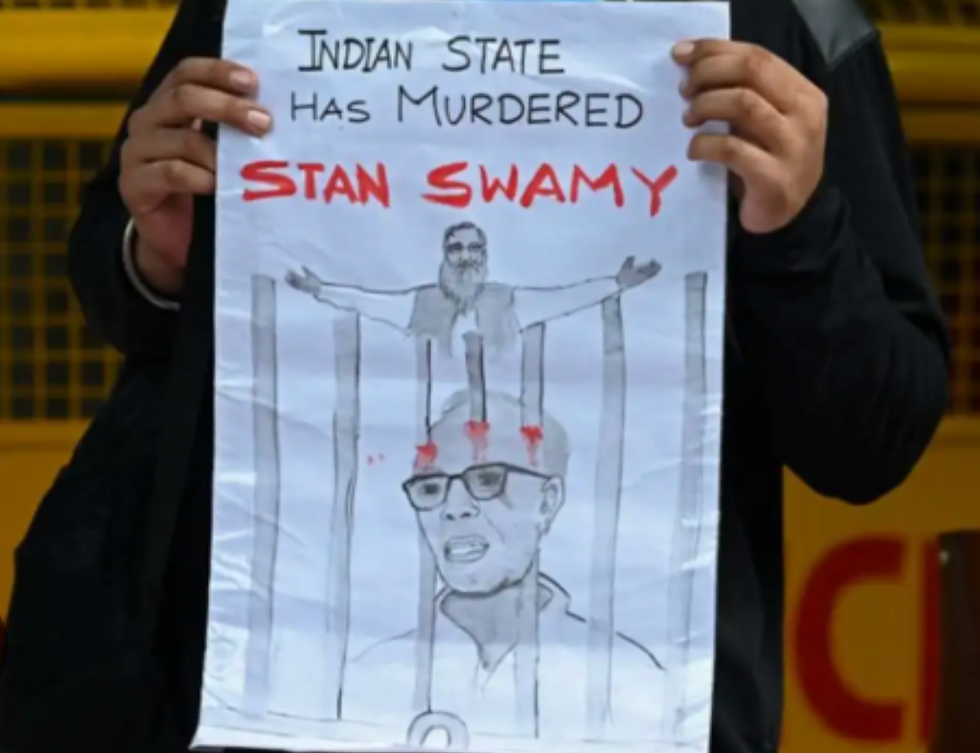
Independent investigations into the computers of three accused in the Bhima Koregaon case (that Swamy had been arrested for) revealed damning evidence of hacking, surveillance, and evidence tampering, allegedly supported by Indian authorities. The evidence upon which the case against was built had been planted on the accused persons’ computers and devices, with sources alleging involvement of the Indian police. [84] Stan Swamy devoted decades of his life to empowering the Advisasis, a tribal group in India, against historic neglect and exploitation. He founded the Vistapan Virodhi Jan Vikas Andolan, an all-India platform to secure land rights of Dalit and Adivasi people, and advocated against their forced displacement for infrastructure projects and mining. He documented mass arrests of Adivasi youth, frequently accused by authorities of being "Naxalites" or "Maoists." [85] This work was his legacy, but unfortunately went against the government’s agenda, and eventually led to his persecution.
Fifteen other human rights defenders were arrested in the same case; most of them, like Swamy, were over 60 years old with serious health conditions. The case represented the limits to which the Modi government would go to use UAPA to target dissent. The trial for the case has yet to commence, but a 84 year old priest with Parkinson’s whose life’s work had been to secure land for India’s most marginalised communities was its unfortunate victim. This is what the fourth filter looks like at its most total, the full weight of the State’s legal machinery being deployed as a weapon of elimination, with democratic procedure providing the cover. When the law itself becomes the instrument through which dissent is destroyed, authoritarianism requires no coup, no suspension of constitution, no declaration of emergency. It requires only patience, procedure, and the willingness to let an old man die waiting for a trial that was never meant to happen.
The Importance of Being (Properly) Indian
When Chomsky and Herman identified dominant ideology as their fifth filter, they described the relatively subtle background assumptions that make certain questions feel legitimate and others feel extreme. In stable liberal democracies, this filter operates at the margins, shaping what gets covered and what gets dismissed as radical while leaving space for genuine contestation. A defining feature of Modi’s India is the operation of this filter as the total architecture of political reality itself. Here, ideology doesn’t just shape discourse but reconstitutes what can count as true, who can count as a victim, and what constitutes injustice. Hindutva forms that architecture, and understanding it is the key to understanding India’s functioning as a contemporary democracy.
The distinction between Hindutva and Hinduism is not just semantic hairsplitting but the structural key to Modi’s ideological project. Hinduism is a vast, philosophically diverse religious tradition spanning millennia, encompassing texts, practices, and interpretations that resist reduction into a single political program. Hindutva, on the other hand, is a right-wing ethno-nationalist political ideology formulated by Vinayak Damodar Sarvarkar in the early 1920s that defines India’s cultural identity in terms of Hindu supremacy and desires to make India an overly Hindu nation-state.
Sarvarkar set out not to describe a faith community but spread his will of constructing a nation with built-in exclusions. His framework set out to describe a Hindu as someone for whom India was both the fatherland and the holy land, [86] while Muslims and Christians, whose religious histories took place elsewhere, would necessarily have divided loyalty to India. [87] Two hundred million Indian Muslim citizens [88] whose ancestors had lived on the Indian subcontinent for a thousand years were rendered foreign through a definitional sleight of hand.
Hindutva never hid its fascist inspiration and heavily borrowed ideas from European fascism [89], leading to the founding of the Rashtriya Swayamsevak Sangh (RSS) in 1925 by K.B. Hedgewar, a doctor from Nagpur who had grown disillusioned with the Congress-led independence movement’s inclusive nationalism and wanted to build something explicitly Hindu in character. [90] The RSS was conceived as an ambitious civilisational vanguard, a permanent organisational infrastructure for transforming Indian society from the ground up through daily ideological formation.
The movement has been described as a variant of right-wing extremism adhering to a concept of homogenised majority and cultural hegemony through a conscious study of Italian fascism and Nazism by its founding members. B.S. Moonje, a founding RSS leader, met Mussolini in 1931 specifically to study organisational methods for building fascist youth movements, and returned with detailed notes on how to structure RSS’s paramilitary wing. [91] The RSS’s second chief, M.S. Golwalker, praised Nazi Germany in his writings, stating it had “shown how well nigh impossible it is for Races and cultures, having differences going to the root, to be assimilated into one united whole; a good lesson for Hindustan to learn and profit by”. [92]
What distinguished the RSS from European fascist movements wasn’t ideology but the gruelling method of patience that it employed. To understand why this succeeded, it is important to note that Hitler wasn’t the one who created German antisemitism but rather he activated it by making his project legible to Germans as something other than madness. The RSS worked on the same principle by using the Hindu-Muslim tension cultivated by the British colonial administrators through divide-and-rule strategies, consciously inflaming religious identities to prevent unified opposition to colonial rule, much like how it’s being used today to prevent unified resistance to Modi’s rule. The RSS simply organised the existing fear by giving it permanent political infrastructure.
The method to the madness was the shakha, a daily schedule meticulously structured to consist of physical drills, Sanskrit shlokas, patriotic hymns, discussion on current events, and concluding with a prayer to the motherland. [93] This was ideology delivered as community; a boy who attended shakha from the age of eight did not experience himself as receiving political formation but simply experienced belonging. By the time he was old enough to vote, the Hindutva worldview was not an opinion he held but an identity he inhabited. The training modules consisted of a glorious Hindu past spoiled by Muslim aggressor, built not through invention but selective amplification of real historical conflicts, stripped of context and organised into a story of Hindu greatness and Muslim violation that the living memory of the Partition made viscerally credible.
The real sophistication however lay in the RSS’s institutional assimilation. After setbacks following Gandhi’s assassination by an RSS-affiliated man [94], the organisation strategically expanded into schools, universities, trade unions, and civil services. Through organisations like the Vishwa Hindu Parishad, Bajrang Sal, ABVP (student wing), BMS (labour wing), and Bharatiya Kisan Sangh (farmers), the RSS created the appearance of representing diverse constituencies while maintaining centralised ideological control. Social service activities created goodwill while serving as vehicles for ideological indoctrination, particularly effective in areas where state services were absent, filling the vacuum left by state negligence while embedding Hindutva values into communities with distinct religious traditions.

When Modi activated this apparatus in 2014 with 71 percent of his cabinet having RSS backgrounds [95], placing RSS-affiliated individuals across universities, research councils, and historical bodies, and rewriting school textbooks to reflect Hindu-centric narratives [88], he was not introducing a foreign ideology to Indian society. He was giving state power to one already embedded in millions of Indians as identity itself, as the common sense through which they understood history, community, threat, and belonging. What German industrialists purchased when they funded Hitler in February 1933 was the Volksgemeinschaft, the people’s community that redirected working-class anger from capitalists towards Jews; Hindutva performs the identical function by redirecting anger from Ambani and Adani towards India’s two hundred million Muslims and eighty million Christians.
The fifth filter’s power lies not in what is suppressed but what is made unthinkable. Every ideology shapes discourse, but Hindutva established a framework that determines whose suffering registers as real, whose violence counts as violence, and whose silence becomes complicity. On May 3, 2023, ethnic violence erupted in India’s northeastern state of Manipur between the majority Meitei community (predominantly Hindu) and the Kuki-Zo tribal communities who are predominantly Christian. The proximate cause was a state High Court recommending that the dominant Meitei community receive Scheduled Tribe status, which tribal communities feared would allow the Meiteis to purchase land in their protected hill areas and claim government jobs reserved for historically marginalised groups. Protests against this policy turned into violence with 258 people killed and 60,000 displaced by November 2024. [96]
Chief Minister N. Biren Singh, a politician from Modi’s party, did not position himself as a neutral administrator attempting to restore order between two warring communities. His administration provided direct political patronage to armed vigilante groups such as Arambai Tenggol and Meitei Leepun that support the Meitei community. [97] Audio tapes submitted to the Supreme Court allegedly contain recordings from a 2023 meeting at the chief minister’s official residence, with a voice apparently Singh’s describing colluding in the bombing of Kuki villages and shielding Meitei attackers. [98] Singh also publicly accused the Kuki-Zo of being drug traffickers and providing sanctuary to refugees from Myanmar with the casual authority of a man who understood that within the Hindutva framework, Christian tribal communities are already presumed guilty of divided loyalties. [96]

The political ineptitude falls in line with BJP’s Hindutva ideology, which identifies Hindus as India’s rightful inhabitants. The Meitei community sees itself as the state’s original inhabitants, using violence against the Kukis whom it perceives as outsiders. The state police forces, rather than maintaining neutrality, split vertically along ethnic lines, with the new police chief asking cops to report to duty in areas where their ethnic group was in the majority. India’s Supreme Court expressed concerns over what it termed the “absolute breakdown of law and order”, noting “serious allegations including witness statements that law-enforcing machinery has been inept at controlling the violence and, in certain situations, colluded with perpetrators”. [98]
And for 78 days India’s Prime Minister said nothing. While 250 churches in Manipur burned, Modi visited the United States, Egypt, UAE, hosted the G20 summit, and campaigned extensively in state elections. When the opposition tabled a no-confidence motion to force parliamentary debate on Manipur, Modi delivered a two-hour speech focused on the government’s accomplishments and accused the opposition of “defaming India” through the vote, to which opposition MPs staged a walkout. When a European Parliament resolution condemned the violence, the government called it “unacceptable” and a reflection of “a colonial mindset”. When international human rights organisations documented state complicity in the violence, the government dismissed it as anti-India interference. [99] Every external demand for accountability was reframed through the Hindutva framework as Western powers attempting to destabilise the Hindu civilisation.
Only after a video emerged showing a Meitei mob stripping and parading two Kuki women naked, one of whom was subsequently gang-raped, Modi finally made his statement. The incident reportedly took place just a day after the violence started, and a police complaint had been filed about the same. [96] The video had existed for two and a half months, and had been presented to the state government and the central government. It was ignored until it caused a wildfire on social media, making silence politically untenable. Even then, the chief minister denied that the women were raped despite being confronted with video evidence of the rape. [100] This denial wasn’t scandalous however since the victims were Kuki and Kuki women’s bodies do not register with the same moral weight as Hindu women’s bodies.
The fifth filter is therefore not the mere suppression of facts but the determination of whose facts matter. Modi’s support base did not revolt during his 78 days of silence, nor did any Hindu nationalist organisation condemn the attacks on Kuki villages. The national media remained silent as Manipur burned, and as it became, as one analyst noted, “BJP’s (Modi’s party) political laboratory away from the attention of the people of the mainland”. The silence wasn’t imposed but chosen by those who had internalised the Hindutva framework through which Christian tribal suffering registers as a complication in someone else’s civilisational conflict rather than a national emergency demanding accountability.
The contrast with how Hindu suffering is covered makes the ideology visible in relief. When Meitei civilians were displaced by Kuki militants, it generated outrage, political demands, and the attention of one Mr. Narendra Modi. When Kuki villages were burned and their women raped by Hindu nationalist Meitei mobs backed by the State, it generated 78 days of silence by the same man followed by yet more denials from his top party officials. The ideology determines, at the level of perception itself, whose violence is violence and whose suffering is suffering.
Hindutva has reorganised the basic moral categories through which reality is perceived such that the question of accountability itself is never properly formed. One cannot demand justice for Kuki victims within a framework that has already classified them as drug-trafficking Christian outsiders threatening the fabric of Hindu civil society. One cannot hold the government accountable for 78 days of silence within a framework that has established Modi’s silence was statesmanship and the opposition demands were defamation. The facts of Manipur were never truly hidden but rather rendered unrecognisable by processing them through an ideological filter that transformed ethnic cleansing into majoritarian self-defense.
When ideology so completely captures the pseudo-environment that documented atrocity itself cannot be assembled into coherent critique of power is when democratic accountability becomes impossible. This is not because people are easily deceived but because the framework through which they process reality has been carefully curated by a century of RSS infrastructure and two decades of media amplification, to produce a population that experiences its own complicity in ethnic violence as patriotism and its government’s defence of that violence as a civilisation reclaiming its rightful place in history.


Comments