


Who Owns Your Opinion? Power, Platforms, and Persuasions Online
Introduction
Are our opinions truly ours? Or have they been pre-produced, thought about and sold right back to us? With infinite scrolling, belief no longer forms in isolation. It is shaped, produced and even deliberately engineered. Every tap on Instagram, every video waiting in a YouTube queue, or every trending topic on X happens not by accident, but as part of a media complex designed around one thing: attention. Behind the facade of connection and personalisation, the digital realm has become one of the most powerful forces shaping political and social opinion today.

And this is exactly what the business of opinion is all about: creating a structure in which opinions are shaped by more than mere fact or experience, but instead shaped by algorithms and platforms that are built to attract maximal engagement. When social media becomes the piping hot source for news, the question becomes unavoidable: Are we thinking for ourselves, or are we being subtly guided toward conclusions that serve larger interests?
The Present Moment: Opinion in the Age of Algorithms
Today, social media platforms are no longer neutral spaces for communication. Instead, they are highly optimised ecosystems run by algorithms designed to keep their users engaged for as long as possible. Platforms like Instagram, TikTok, YouTube, Facebook, and X are among the most widely consumed information sources globally daily. Billions of people around the world access these platforms not only as a source of content or entertainment, but also as a source of new political commentary. For instance, on TikTok, almost half of its users indicate that they are exposed to political content, although most of these users are not actually contributing political content to the site themselves [1][2].
Additionally, a survey conducted in 2025 revealed an increasing number of U.S. Adults regularly received news on online platforms, with 1 in 5 Americans receiving news on TikTok, a significant increase from the 2020 levels. This figure increases to 43% within the age group of less than 30 years. This is concerning because, unlike traditional news outlets, where a human decides which information to display, online news relies on algorithms. [3]

Another major concern expressed by social media news consumers is the issue of inaccuracy as well as misinformation. Previous research evidence has indicated that misinformation or deceptive posts tend to be shared faster and to a greater extent than facts. Misinformation spreads much faster than correct information because it is designed to trigger emotional responses. Engagement becomes the truth because what’s most popular must be the truth.
The end product then is a personalised reality. These algorithms identify what provokes an emotional response: anger, fear, and validation; and they feed us more of the same. The longer this process continues, the more users are trapped within an “echo chamber”, where differentiating perspectives becomes increasingly rare [4]. Research on these echo chambers has often found social networking sites to regularly function in a way that reinforces current ideologies rather than exposing individuals to differing perspectives [5]. People’s political views are rigid, not because they have overcome the opposition, but because they have yet to be exposed to the opposition’s position.
Influencers: The New Opinion Leaders
What occurs concurrently with algorithmic control is the development of influential entrepreneurs, or influencers, who command trust, loyalty, and attention on a scale that was once reserved for institutions.
Influencers have a very distinct position. They are not viewed as remote figures of authority but rather as people we can relate to, “people like us”. It is precisely this sense of reality that lends extra weight to influencers' opinions. When they talk about political events, social movements, or ideological positions, they do so in a language that feels personal, emotional and relatable.
But Influencers also have economic roles. However visible, relevant, and profitable they are, it all depends on the engagement metrics. It sets up a dynamic in which strong and provocative views are often rewarded, while restraint is penalised. Over time, it becomes increasingly likely that the content is shaped to appeal to the community’s expectations and to simply confirm their views rather than question them. This condition is called ‘audience capture’, and through it, influencers not only embody public opinion, but they also help shape it. Politics is intertwined with branding, and conviction becomes a commodity optimised to become viral. [6]
Gatekeepers to Feedback Loops: A Brief History
To understand how we got to this point, it helps to step back.
Manipulation of public opinion has had a history of its own. In the early parts of the twentieth century, discussions were often held about mass media being utilised to shape public opinion and thinking. Newspapers, radios, and later television controlled narratives. Though they had their own imperfections, these media outlets still abided by strict guidelines.
With the dawn of the Internet, it not only promised a revolution in communication but also a revolution in how we perceive social dynamics. But power, rather than being decentralised, was redistributed. Instead of editorial opinion, there was optimisation.
With the late 2000s and early 2010s came the end of chronological feeds and the arrival of recommendation systems. Sites ceased to display current events to users and instead displayed to them what they were most likely to interact with. This represented a massive
shift towards the use of feedback loops, where beliefs drove behaviour, and algorithm-driven reinforcement sustained more beliefs. Scandalous incidents, culminating in personal data misuse through political targeting, played a big part in showing the extent to which individual psychology might be exploited in order to shape opinion. The data was no longer broadcast; rather, it was personalised. [7]
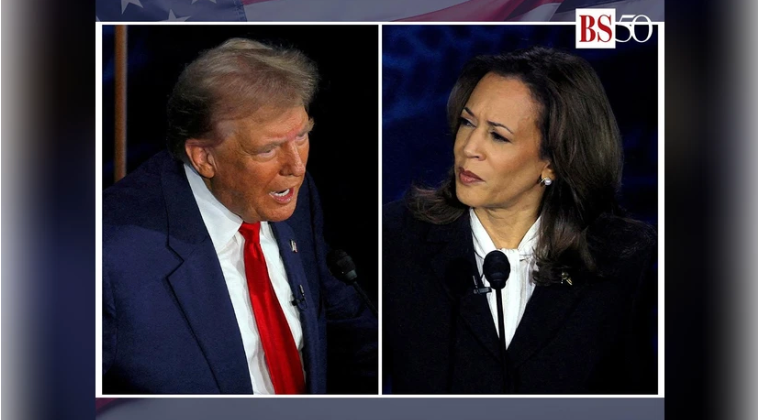
Furthermore, influencer campaigns, examined in the context of the presidential campaign in the United States, demonstrated that news influencers were responsible for more people writing positively about one candidate rather than another [8]. This issue, of how people’s interactions in online environments, such as social media, influence their belief systems in relation to global and national developments, has been heavily researched in academic communities around the world. [9]
Looking Ahead: Opinion in the Age of AI
The future of opinion formation appears to be more complex. Artificial Intelligence technology has given rise to tools that can produce hyper-realistic visual and textual media. Deepfakes and automated writing make it increasingly difficult to separate what is genuine from what is not.
On the other hand, there are emerging efforts on the regulatory front. Regulations, such as the EU’s Digital Services Act, are trying to make algorithm-driven decisions, as well as political advertisements, more transparent [10]. But the answer does not solely lie within regulatory frameworks for these engagement-driven systems [11]. In the end, the long-term viability of democratic discourse may be contingent on the issue of media literacy: the capacity to decode information critically.
Conclusion
The digital world has not eradicated the concept of independent thinking, but the conditions in which such thinking is based have dramatically changed, arguably for the worse. Opinion has become the point where technology, psychology, and business converge. Algorithms determine what is visible, narratives are shaped by influencers, and views are commodified. The business of opinion operates in invisibility.
Identifying these patterns does not eliminate the role of human agency; it reinstates it. In a world in which belief is ever more determined by code, perhaps the most revolutionary thing one can do is pause, peer over the edge of the feed, and query not only what we believe, but why we believe it.
Article by:
Nishitha
PES MUN Society



Comments